
Patron saints
St. Thérèse of Lisieux: The Little Way of Love and Trust
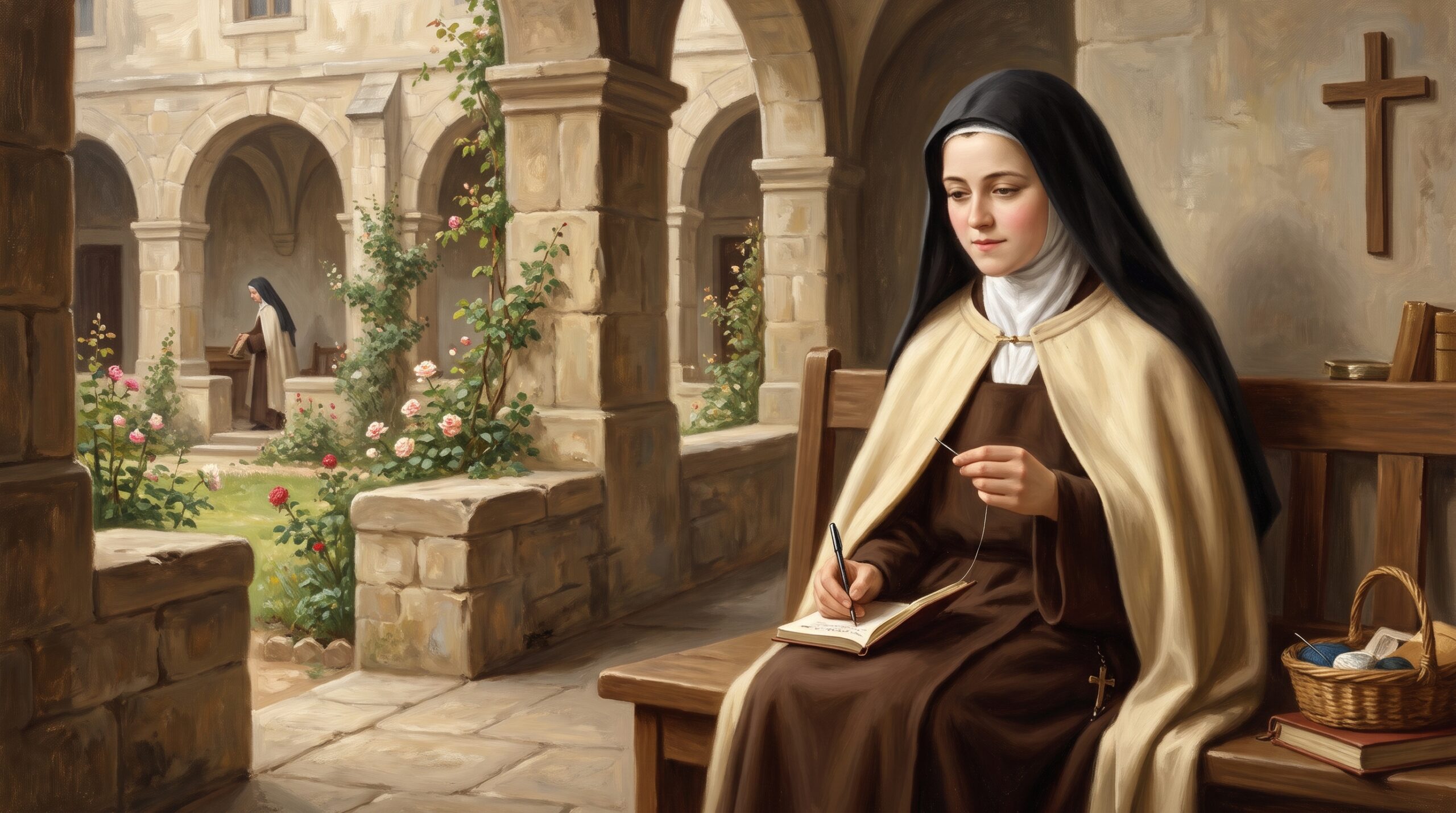
Holiness in ordinary acts of love
St. Thérèse of Lisieux (1873–1897), also known as St. Thérèse of the Child Jesus, entered the Carmelite convent at Lisieux when she was fifteen. She lived a hidden life of prayer in the monastery and died at a young age. Her influence, however, reached far beyond the convent through her spiritual writings, especially her autobiographical manuscripts, later published as The Story of a Soul.12
Thérèse’s spirituality is often called the “little way.” It teaches that holiness is not reserved for people who perform extraordinary public deeds. Her writings point instead to love of God expressed in the ordinary duties and small acts of daily life. The Dicastery for the Causes of Saints describes her teaching as a way of spiritual childhood that leads toward Christian holiness through a life of simplicity and love.3
The “little way” should not be mistaken for doing nothing, avoiding responsibility, or pretending that hardship does not matter. Thérèse’s writings speak of trust in God amid real difficulty. Pope John Paul II notes that her autobiographical manuscripts recount a painful trial of faith, lived with trust in God’s merciful love. Her witness is therefore not that faith removes every struggle, but that a person can continue to entrust herself to God and love others even while passing through hardship.2
Thérèse also understood her hidden life as connected to the mission of the Church. Her writings express a desire to serve God and the salvation of souls; she corresponded with missionary priests and developed a strong spiritual concern for the Church’s work of evangelization. Pope John Paul II recognized the depth of her teaching by declaring her a Doctor of the Church in 1997.23
Thérèse’s example fits a theme about resisting pride when understood as a call away from self-importance and toward humble love. Her humility was not a claim that people lack worth; it was a way of relying on God rather than seeking recognition. Her life invites readers to practice love in the small responsibilities and relationships they already have.
A careful note about claims of deliverance
The sources cited here support Thérèse’s teaching on trust, love, and the little way. They do not support presenting her as an exorcist or as a figure whose intercession guarantees deliverance from evil. This page focuses instead on the spiritual witness that her writings and life offer: humble trust in God and faithful love in ordinary life.
Sources
- St. Thérèse of Lisieux, The Story of a Soul (her autobiographical manuscripts).
- Pope John Paul II, Apostolic Letter Divini Amoris Scientia (1997), proclaiming St. Thérèse a Doctor of the Church. Read at Vatican.va
- Dicastery for the Causes of Saints, profile of St. Thérèse of the Child Jesus.
Questions? info@catholicsrejectsatan.org